Start with a conversation
Share what you would like to understand or change.
 Book via WhatsApp
A fixed orthodontic option discussed with the orthodontist where appropriate.
Share what you would like to understand or change.
Suitability is determined after an appropriate clinical assessment.
Timing and next steps are confirmed only after the clinician’s review.
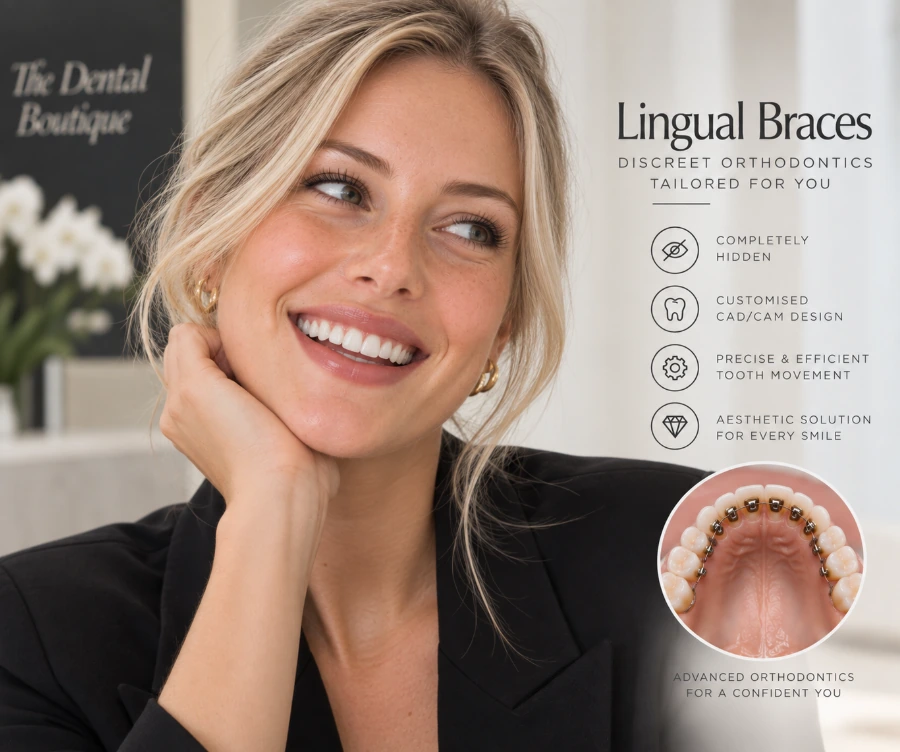
Lingual braces are fixed to the inner surface of the teeth, making them less visible from the front. The clinic-supplied treatment draft describes a customised, digitally planned appliance rather than a standard one-size approach.
01Whether the inner surfaces of your teeth can support the appliance
02Your bite, periodontal health and treatment objectives
03Digital records and customised appliance design
04Adaptation, hygiene and review requirements
Your orthodontist evaluates your teeth, bite and facial characteristics to decide whether lingual treatment may be appropriate.
A digital scan and other diagnostic records can support customised treatment planning.
The brackets and wires are produced for the individual anatomy and planned tooth movements.
The appliance is fitted behind the teeth and reviewed throughout active treatment before retention.
Explore the profiles and clinical focus of the team members associated with this treatment area.
Selected anonymised images supplied and approved for publication by the clinic. Results vary from person to person.
4 case images · Swipe or use the arrows to browse.
Drag or use the arrow keys on a comparison handle to inspect the paired images.
They are positioned behind the teeth and are generally hidden from a front view, although visibility varies with the mouth position and individual anatomy.
No. Case selection is important and depends on the teeth, bite, periodontal health, anatomy and treatment objectives.
An adaptation period can occur. Your orthodontist will explain hygiene, comfort and review considerations for your case.
Sunday to Friday, 10:00 AM–6:00 PM. Closed every Saturday.